CHOOSE THE FINISH THAT FITS
GOOD LOOKS.
PRACTICAL REASONS.
Each material has its strengths. Here’s why you might choose it, and what we need to check to make it work for your home.
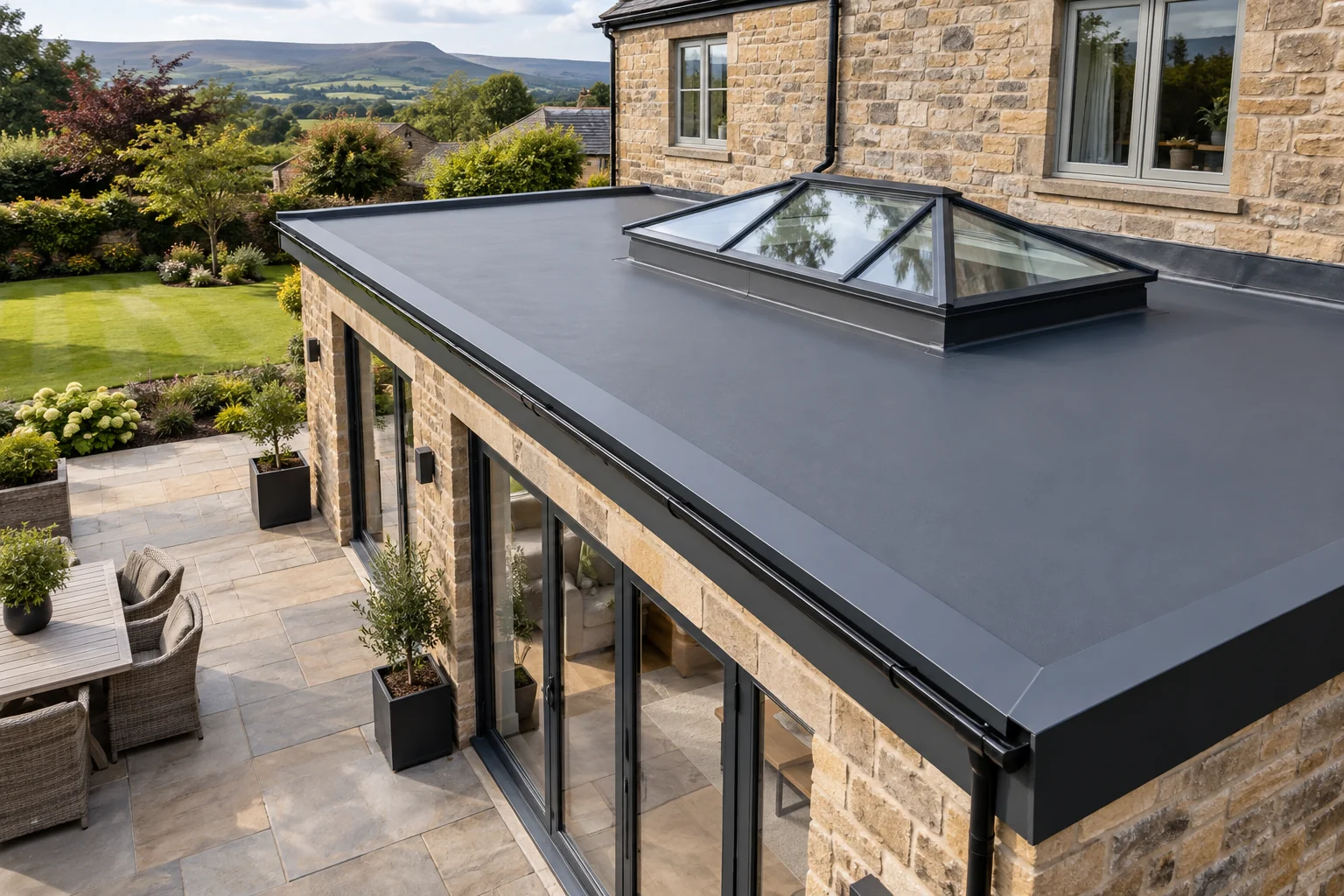
Why choose GRP roofing?
- A continuous finish: fibreglass reinforcement and resin form a roof covering in place, with details formed around edges and upstands.
- A neat appearance: a hard topcoat and matching trims can give an extension or garage a clean, smart finish.
- No torch-on installation: the system is applied cold, without the open flame used for torch-on felt.
Worth considering for: domestic flat roofs where a firm, suitable deck and carefully formed details can be provided.
Getting it right: the deck, movement detailing, dry weather during application and correct curing conditions are essential. A standard flat roof is not automatically suitable as a walk-on terrace. The roofing product, specification and any guarantee will be confirmed in your quotation.
Ask us about GRP roofing ↗
Why choose EPDM rubber roofing?
- Flexible protection: the rubber membrane can accommodate normal building movement and changes in temperature.
- Fewer seams: many straightforward domestic roofs can use a large single sheet, depending on the roof’s size and layout.
- Weather resistance: EPDM is resistant to UV and ozone, with relatively little routine maintenance.
Worth considering for: extensions, garages and outbuildings needing a flexible flat-roof covering.
Getting it right: the substrate, adhesive, joints, outlets and edge details still matter. Keep drainage clear and protect the membrane from sharp objects and unplanned foot traffic.
Compare rubber and GRP for my roof ↗
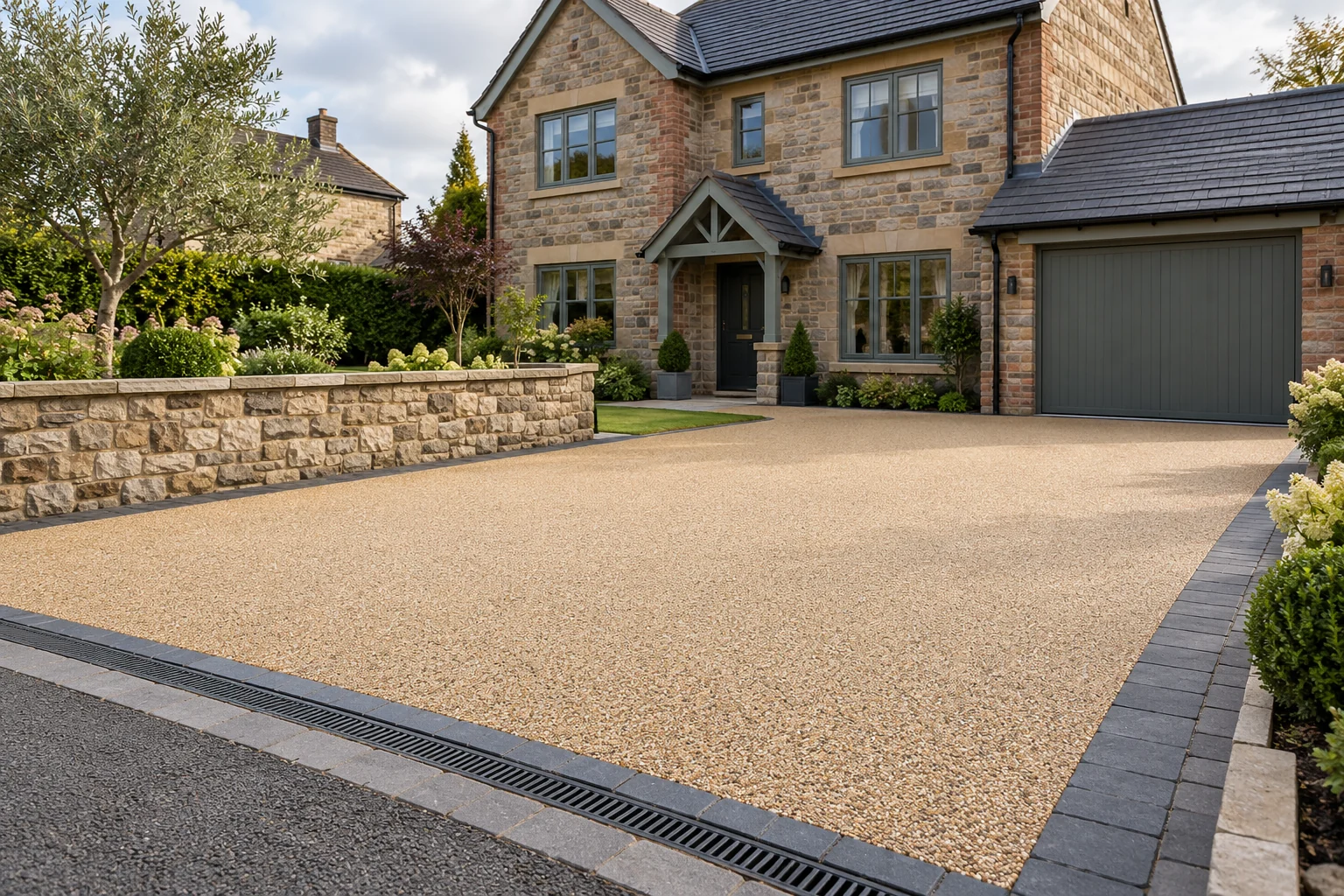
Why choose resin-bound surfacing?
- The look of natural stone: choose aggregate colours that complement your house, walls and planting.
- A bound finish: the stone is mixed into the resin, creating an even surface without a loose-gravel finish.
- Drainage potential: water can pass through the surface when it forms part of a properly designed permeable construction.
Worth considering for: driveways, paths and garden areas where a decorative finish is a priority.
Getting it right: resin-bound and resin-bonded are different systems. A resin layer over an impermeable base does not make the whole driveway permeable. The base, drainage, intended loading and suitable resin specification must be checked. Occasional cleaning is still needed.
Talk through resin-bound options ↗
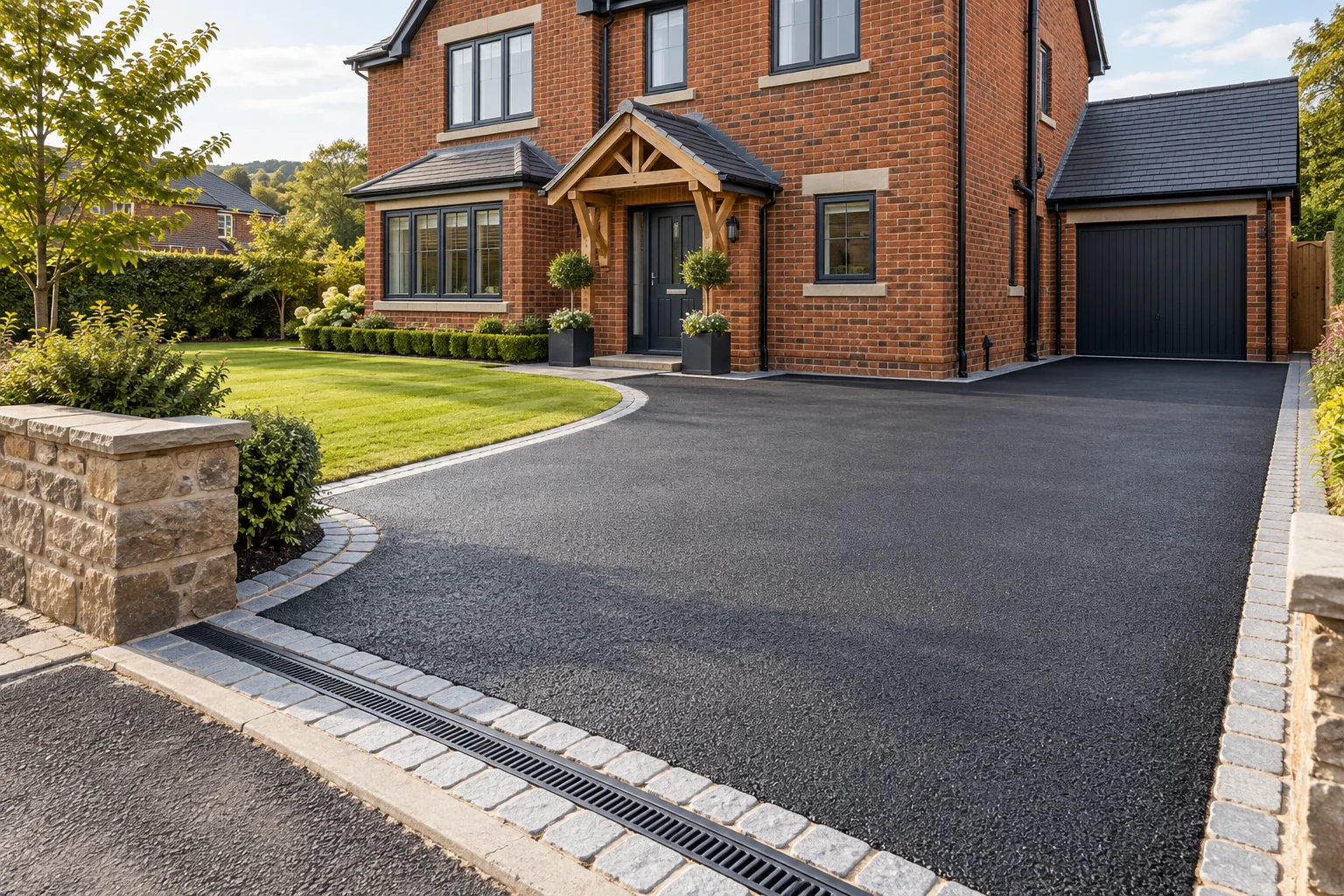
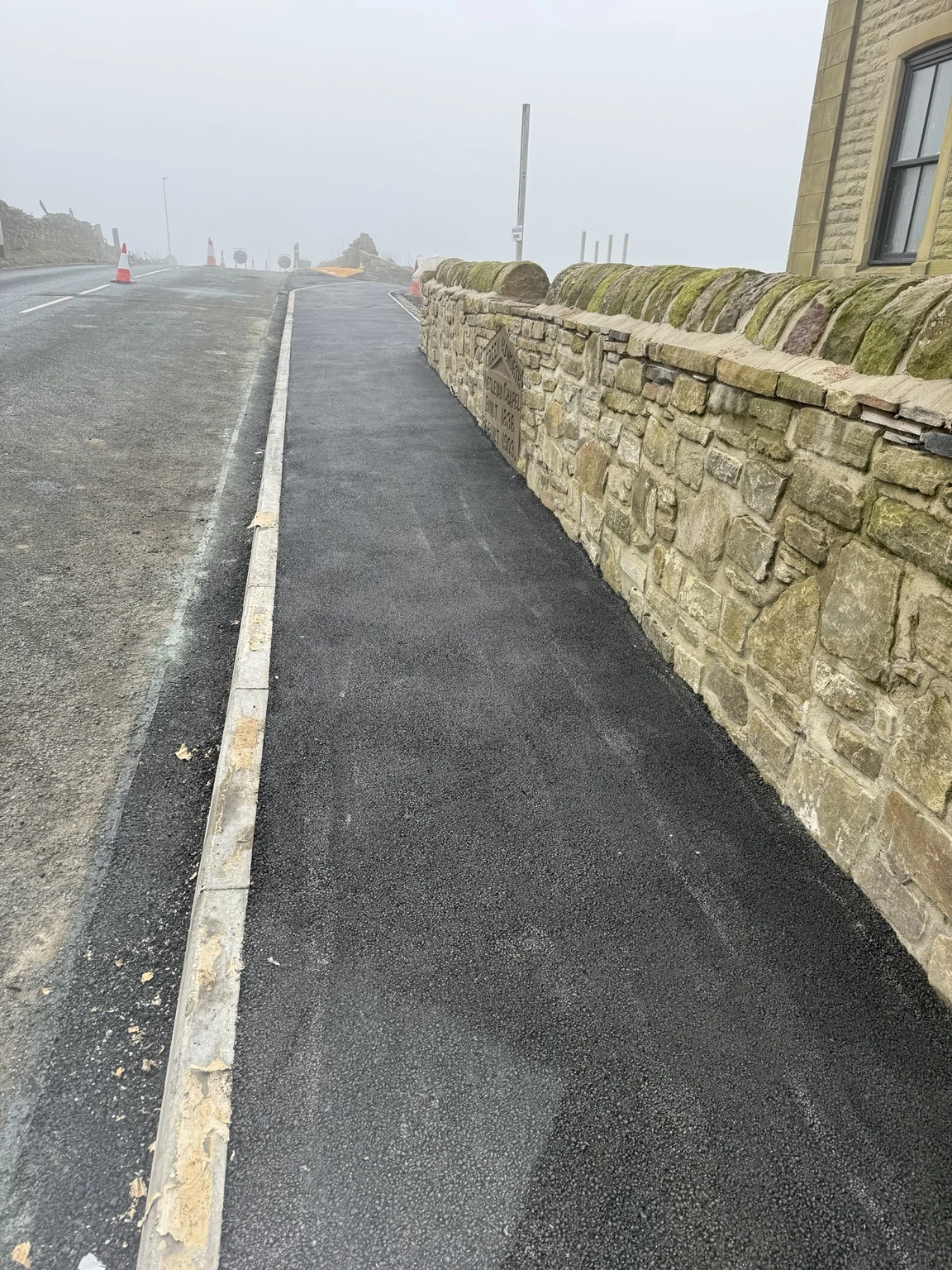
Why choose tarmac?
- A practical everyday surface: a correctly specified asphalt driveway is suited to regular vehicle use.
- A simple, tidy appearance: a dark surface works well with contrasting kerbs, stone borders and entrance details.
- Straightforward upkeep: a hard-wearing finish without lots of individual paving joints.
Worth considering for: driveways, parking areas and access routes where function and a clean finish come first.
Getting it right: preparation and compaction are crucial. Conventional tarmac requires suitable drainage; porous asphalt is a separate specification. We assess the existing base before proposing an overlay.
Discuss a tarmac driveway ↗
Porcelain, natural stone or block paving?
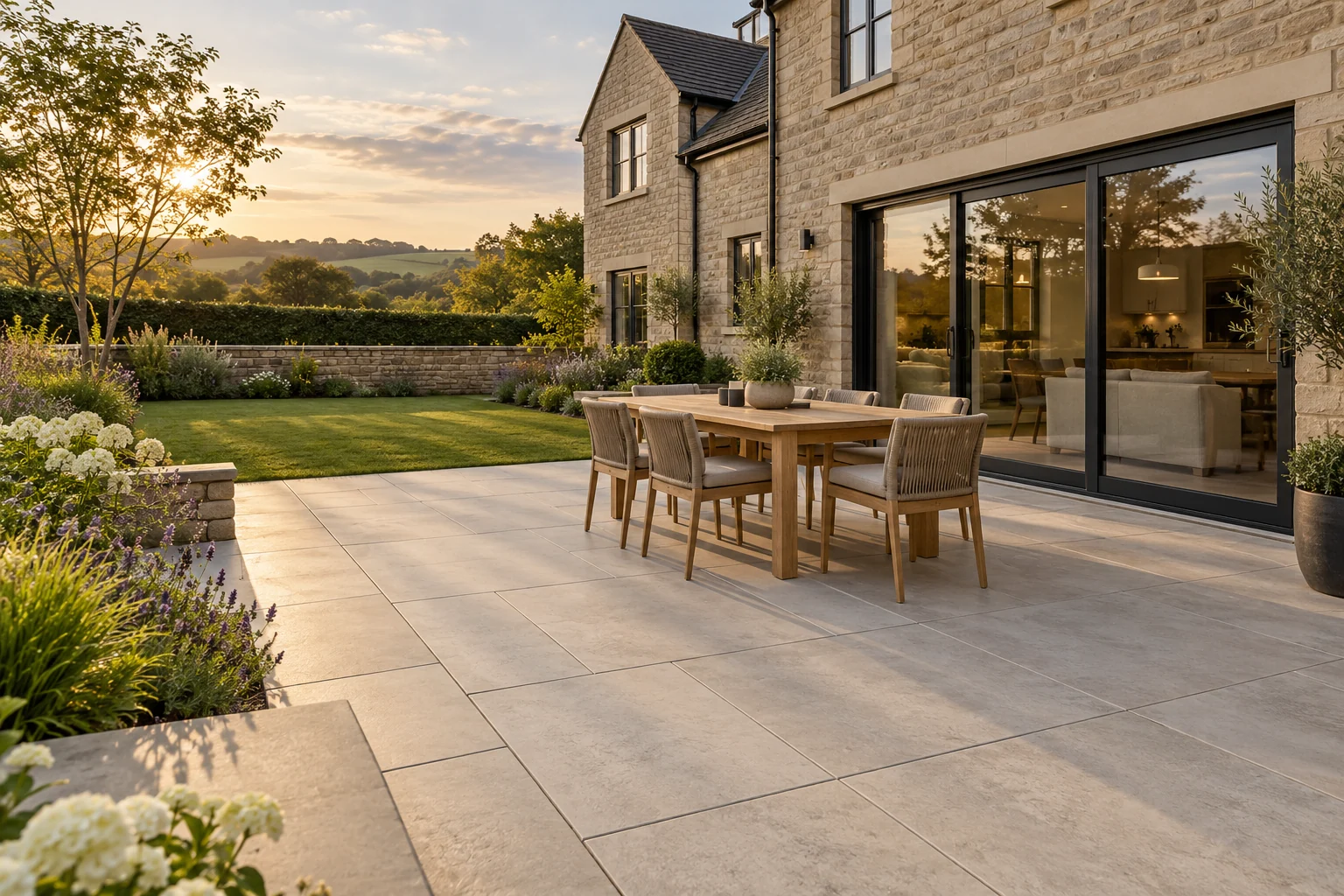
- Porcelain: a consistent, contemporary look with low water absorption and relatively easy cleaning. Choose an outdoor paving product suitable for the location and wet conditions.
- Indian sandstone and natural stone: individual colour and texture variations give a patio character, particularly beside traditional brick and stone homes.
- Block paving: a wide choice of patterns, colours and contrasting borders for driveways and paths. Individual blocks can be lifted where access or a local repair is needed.
The final choice should suit your budget, use and preferred maintenance level. A suitable base, laying method, joints, levels and drainage matter whichever finish you choose. We can talk through samples and the details before the specification is agreed.
Help me choose my paving ↗